
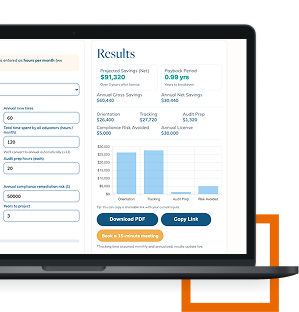

ROI Calculator
See the impact of Dossier with our ROI calculator
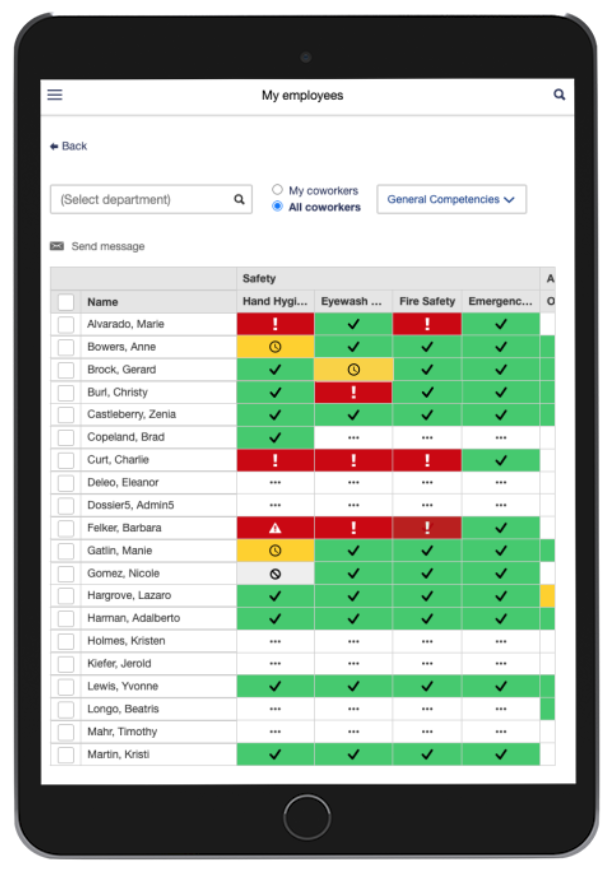

ROI Calculator
See the impact of Dossier with our ROI calculator
A clinical ladder program is a structured, multi-level framework that lets nurses advance in their careers by demonstrating growing clinical expertise, leadership, and professional contribution rather than by leaving the bedside for management. Where a traditional promotion path forces nurses to choose between staying in direct patient care and moving up, a clinical ladder program rewards deepening practice at every stage. This guide breaks down how these programs work, walks through the typical levels with real examples, and explains exactly what nurses must show to climb from one rung to the next.
At its core, a clinical ladder program is a career progression system built around defined competencies. Each level, or rung, carries a clear set of expectations spanning clinical skill, evidence-based practice, education, and professional involvement. Nurses apply or are nominated to advance, assemble evidence that they meet the next level’s criteria, and are reviewed by a committee. Most programs tie each rung to recognition such as a pay differential, a title change, or expanded responsibilities. The result is a transparent path that keeps expert clinicians engaged and at the bedside.
Hospitals invest in clinical ladders because they solve several problems at once. They improve retention by giving experienced nurses a reason to stay and grow. They strengthen quality and safety by rewarding evidence-based practice and continuous learning. They also support Magnet recognition and similar designations, which expect a formal professional advancement structure. competency management platform
or nurses, the payoff is recognition, higher earning potential, and a defined route to leadership that does not require abandoning clinical work.
Most clinical ladder programs use four levels, sometimes labeled Clinical Nurse I through IV. Level I is the entry rung for new graduates and nurses still building core competency, focused on safe, independent practice under the unit’s standards. Level II recognizes the proficient nurse who consistently delivers strong care, mentors newer staff informally, and begins engaging in unit initiatives. Level III marks the expert practitioner who leads projects, applies evidence to change practice, and serves on committees. Level IV is reserved for nurses whose influence extends beyond the unit through research, published work, system-wide initiatives, or formal precepting and teaching roles.
Learn how Dossier supports clinical laddering
Consider a medical-surgical nurse named Maria. As a Level I nurse in her first year, she focuses on mastering her unit’s protocols and passing all required competencies. By her third year she reaches Level II, precepting new hires and joining the unit’s falls-reduction group. At Level III she designs and leads a project that lowers catheter-associated infections, presenting the results to nursing leadership. Reaching Level IV, she co-authors a poster for a national conference and helps standardize the protocol across the hospital system. Each rung is documented with concrete evidence, not just tenure.
Advancement almost always rests on a portfolio of evidence rather than a single review. Common requirements include validated clinical competencies, continuing education hours or certifications, participation in committees or shared governance, evidence of mentoring or precepting, and a quality-improvement or evidence-based practice contribution. Higher rungs add expectations around leadership, research, and influence beyond the immediate unit. Because the criteria are competency-based, the program stays fair and repeatable across departments.
Designing a clinical ladder starts with defining the competencies and evidence required at each level, then building a fair application and review process. The operational challenge is managing the documentation: tracking competencies, certifications, and portfolio evidence for hundreds or thousands of nurses. Many organizations move this off spreadsheets and into a competency management platform such as Dossier, where each nurse’s skills, credentials, and advancement evidence live in one auditable record. That visibility makes review committees faster and keeps the program defensible for accreditation.
Is a clinical ladder the same as a career ladder? Not quite. A career ladder can include moves into management or education, while a clinical ladder specifically rewards advancing clinical expertise while staying in direct patient care.
How long does it take to move up a level? It varies by program, but most require a minimum time in the current role plus documented evidence, often one to three years between rungs.
Do clinical ladder programs come with a raise? Usually yes. Most programs attach a pay differential or bonus to each level, though the structure differs by employer.
Are clinical ladders only for hospitals? No. While common in hospitals, similar frameworks exist in long-term care, ambulatory settings, and large health systems.
QSEN competencies are six core areas of knowledge, skills, and attitudes that nurses need to continuously improve the quality and safety of patient care. Developed by the Quality and Safety Education for Nurses (QSEN) project, they are: patient-centered care, teamwork and collaboration, evidence-based practice, quality improvement, safety, and informatics.
QSEN stands for Quality and Safety Education for Nurses. It is a national initiative, launched in 2005 with funding from the Robert Wood Johnson Foundation, created to prepare nurses with the competencies needed to continuously improve the quality and safety of the healthcare systems in which they work. QSEN defines each competency in terms of the knowledge, skills, and attitudes (KSAs) nurses should develop.
QSEN competencies matter because they translate the broad goals of “quality” and “safety” into concrete, teachable, and assessable skills. They give nursing schools a shared framework for curricula, give employers a common language for onboarding and competency validation, and ultimately help reduce preventable harm and improve patient outcomes. For practicing nurses, they provide a clear map of the behaviors that define safe, high-quality care.
The six competencies build on one another to support safe, effective care. Patient-Centered Care means recognizing the patient as the source of control and full partner in care. Teamwork and Collaboration means functioning effectively within nursing and interprofessional teams. Evidence-Based Practice means integrating best current evidence with clinical expertise and patient preferences. Quality Improvement means using data to monitor outcomes and improve care processes. Safety means minimizing risk of harm to patients and providers through both system effectiveness and individual performance. Informatics means using information and technology to communicate, manage knowledge, and support decision-making.
Here is a quick reference to the six competencies and their focus. Patient-Centered Care, the patient as partner and source of control. Teamwork and Collaboration, effective functioning in interprofessional teams. Evidence-Based Practice, integrating evidence, expertise, and patient values. Quality Improvement, using data to improve care processes and outcomes. Safety, reducing risk of harm through systems and individual performance. Informatics, using technology and data to support safe decision-making.
Nursing programs embed QSEN competencies into coursework, simulations, and clinical evaluations, while healthcare organizations use them to structure orientation, annual competency assessments, and professional development. Because each competency is defined through knowledge, skills, and attitudes, they can be observed, taught, and validated, making them a natural backbone for a nurse competency program.
Assessing six competencies across an entire nursing workforce is difficult on paper. Many organizations use a competency-management platform to map QSEN-aligned skills to roles, assign and document validations, track evidence of knowledge, skills, and attitudes over time, and generate reports for accreditation and quality reviews. This makes it possible to demonstrate, not just assert, that staff meet quality and safety standards.
What are the 6 QSEN competencies? They are patient-centered care, teamwork and collaboration, evidence-based practice, quality improvement, safety, and informatics.
When was QSEN created? The QSEN project was launched in 2005 with funding from the Robert Wood Johnson Foundation to build quality and safety competencies into nursing education.
What are KSAs in QSEN? KSAs stand for knowledge, skills, and attitudes. QSEN defines each of the six competencies through specific KSAs that nurses should develop and demonstrate.
Are QSEN competencies only for nursing students? No. While QSEN began in nursing education, the competencies are widely used in practice settings for onboarding, ongoing competency validation, and quality improvement among practicing nurses.
A nursing competency checklist is a structured tool used to verify that a nurse can safely and correctly perform the specific skills required for their role. It lists each competency, the criteria for success, and a place for a preceptor or manager to validate and date the demonstration, turning “trained” into documented, verifiable proof of “competent.”
A nursing competency checklist is a document that breaks a role down into its required skills and behaviors, then provides a standardized way to assess and record whether each one has been demonstrated. Rather than assuming competence from a completed course, the checklist captures observable evidence: the skill, the standard, the method of validation (observation, return demonstration, simulation), and the validator’s signature and date.
Checklists are used during onboarding, annual competency validation, cross-training to new units, and whenever new equipment or procedures are introduced.
Competency checklists protect patients and organizations alike. They ensure every nurse can actually perform critical skills, create a consistent standard across a unit or facility, and produce the documentation that accreditors and regulators require. For managers, they replace guesswork with evidence; for nurses, they clarify exactly what is expected and provide a fair, transparent record of their abilities.
An effective checklist is specific, measurable, and easy to use at the point of validation. Core elements include: the employee and role, the competency or skill name, the performance criteria or standard, the validation method, a rating or pass/fail indicator, the validator’s name and credentials, the date, and space for comments or a remediation plan. Grouping skills by category, such as safety, clinical procedures, documentation, and equipment, keeps long checklists organized.
Below is a simple template structure you can copy into a document or spreadsheet and adapt to any role. For each skill row, capture: Skill / Competency; Standard / Criteria; Validation Method (observation, return demo, simulation, written); Met / Not Met; Validator Name & Credentials; Date; and Comments / Remediation. Add category headers (for example, Infection Control, Medication Administration, Emergency Response) and a signature block at the bottom for the nurse and the validator.
While every role differs, common competencies include hand hygiene and infection control, medication administration and the rights of medication safety, IV insertion and management, wound care, patient assessment and vital signs, use of key equipment (pumps, monitors, lifts), emergency response and code participation, and accurate documentation. Specialty units add role-specific skills such as telemetry interpretation, ventilator management, or chemotherapy administration.
Paper checklists work for one nurse but break down across a large workforce, where skills, certifications, and due dates must be tracked for hundreds of staff. Many organizations move to a competency-management platform that digitizes checklists, routes validations to preceptors, stores evidence centrally, flags expiring competencies and certifications, and generates audit-ready reports on demand. This turns competency validation from a filing-cabinet burden into a real-time view of workforce readiness.
What is the difference between a competency checklist and a skills checklist? The terms are often used interchangeably. Both list required skills and record validation, though “competency” checklists tend to emphasize the standard of performance and evidence of ability, not just whether a task was attempted.
How often should nursing competencies be validated? Typically at hire, at the end of orientation, and at least annually, plus whenever new equipment, procedures, or roles are introduced. Your organization’s policy and accreditation requirements set the exact cadence.
Who validates a nursing competency? A qualified validator, usually a preceptor, charge nurse, educator, or manager with demonstrated competence in that skill, observes and signs off. High-risk skills may require validation by a specialty-certified nurse or educator.
Can competency checklists be digital? Yes. Digital checklists and competency-management platforms make it easier to standardize, route, store, and report validations, and they automatically track expirations, reducing manual tracking and audit risk.
A healthcare LMS (learning management system) is software built to deliver, track, and document training, competencies, and continuing education for clinical and non-clinical staff. To choose the right platform, prioritize regulatory compliance tracking, competency management, clinical content, integrations with your HR and credentialing systems, and reporting that stands up to accreditation audits.
A healthcare LMS is a learning management system designed specifically for the needs of hospitals, health systems, long-term care, and other care settings. Beyond hosting courses, it manages mandatory compliance training, tracks license and certification expirations, documents demonstrated competencies, and produces the audit-ready records required by regulators and accreditors such as The Joint Commission and CMS.
General-purpose corporate LMS platforms can host videos and quizzes, but healthcare LMS platforms add the compliance, competency, and credentialing capabilities that patient-care environments demand.
Healthcare training is higher-stakes and more heavily regulated than most industries. Staff must complete recurring compliance modules, maintain licensure, and prove hands-on competency, not just watch a course. The right platform reduces compliance risk, shortens onboarding, standardizes skills across units, and gives leaders visibility into workforce readiness. The wrong platform creates manual tracking, audit gaps, and frustrated staff.
When evaluating a healthcare LMS, focus on the capabilities that map to real clinical and regulatory needs rather than a long generic feature list. The most important include: compliance and mandatory-training automation, competency management with skills validation, license and certification tracking with expiration alerts, a library of accredited clinical content (or easy content authoring), role- and unit-based assignments, robust audit-ready reporting, and integrations with HRIS, scheduling, and credentialing systems. Mobile access and a clean learner experience also drive completion rates.
This is where healthcare LMS platforms earn their keep. Look for automated assignment of required training by role, automatic reminders before due dates, complete audit trails, and one-click reporting that maps to accreditation standards. The ability to show a surveyor exactly who completed what, and when, can turn a stressful audit into a routine one.
A course completion tells you someone watched training; a competency tells you they can actually perform a skill safely. Strong platforms go beyond “click and complete” to capture skills checklists, preceptor sign-offs, and evidence of demonstrated ability. This distinction matters most for clinical roles, where the goal is verified capability, not just attendance. Organizations focused on true clinical competency often pair or replace a traditional LMS with a dedicated competency-management platform that centralizes skills, certifications, and validation in one auditable system.
Run a structured evaluation rather than relying on a demo alone. Define your must-have requirements, involve nursing education and compliance stakeholders early, and score each vendor against the same criteria. Ask for references from similar organizations, test the reporting with your own audit scenarios, confirm integration support, and clarify total cost including implementation and ongoing content. A short pilot with real users is the best predictor of adoption.
What is the difference between an LMS and a healthcare LMS? A general LMS delivers and tracks training for any industry. A healthcare LMS adds compliance automation, competency management, license and certification tracking, and audit-ready reporting tailored to clinical settings and accreditation requirements.
How much does a healthcare LMS cost? Pricing varies widely based on the number of users, features, and content libraries, and is usually quoted per user per year plus implementation. Always confirm whether accredited clinical content and integrations are included or priced separately.
Does a healthcare LMS handle competency management? Some do to a degree, but competency management, skills validation, preceptor sign-offs, and evidence of demonstrated ability, is often deeper in dedicated competency platforms. Confirm exactly how a vendor captures and reports true competency, not just course completion.
What integrations should a healthcare LMS have? At minimum, look for integrations with your HRIS, scheduling, and credentialing systems so that roles, assignments, and certification data stay in sync automatically and reduce manual data entry.
A career ladder is a structured framework that maps out the sequential steps, roles, and skill requirements an employee follows to advance within an organization. For nurses, a career ladder defines how you move from entry-level bedside care toward advanced clinical, leadership, education, or specialty roles, with clear criteria, milestones, and pay increases at each rung.
A career ladder is a defined progression path within a single profession or organization. Each “rung” represents a higher level of responsibility, expertise, and compensation, along with explicit requirements to reach it, such as experience, certifications, education, or demonstrated competencies. Unlike an ad hoc promotion, a career ladder makes advancement transparent and predictable.
In nursing, career ladders are especially common because the profession offers many directions: clinical practice, management, education, research, and informatics. A well-designed ladder helps nurses see exactly what “next” looks like and how to get there.
These terms are related but not identical. A career ladder is the broad, vertical path spanning an entire career. A clinical ladder is a specific type of career ladder focused on recognizing and rewarding clinical expertise at the bedside, so nurses can advance without leaving direct patient care. A career lattice adds lateral moves, letting nurses shift across specialties or functions, not just upward.
Career ladders directly address two of healthcare’s biggest challenges: retention and workforce development. Nurses who can see a clear path forward are far more likely to stay, grow, and remain engaged.
For nurses, the benefits include higher earning potential, recognition of expertise, expanded professional identity, and reduced burnout from feeling “stuck.” For employers, ladders improve retention, strengthen the internal talent pipeline, and raise the overall quality of care by rewarding skill development.
While titles vary by organization, most nursing career ladders follow a recognizable progression. Entry level roles include the new graduate or Nurse I, focused on building foundational competence. Experienced staff nurses (Nurse II-III) take on more complex assignments, precepting, and unit leadership. Advanced levels (Nurse IV / Clinical Nurse Expert) lead projects, mentor, and drive evidence-based practice. From there, nurses branch into management (charge nurse, nurse manager, director), advanced practice (nurse practitioner, CNS, CRNA), education, or informatics.
Advancing usually depends on a mix of experience, education, certification, and demonstrated competency. Practical steps include: understanding your organization’s specific ladder criteria, pursuing relevant certifications, seeking higher education (BSN, MSN, DNP), building a portfolio of projects and outcomes, and finding a mentor. Documenting your competencies and accomplishments is often the single most important factor, because most advancement decisions require evidence, not just tenure.
Designing a career ladder is only half the work; the harder part is administering it consistently. Each rung must have clear, measurable competency criteria, and every nurse’s progress must be tracked, validated, and kept current as skills and certifications evolve. Many healthcare organizations use a dedicated competency-management platform to define ladder requirements, capture evidence of skills, manage certifications and due dates, and give both nurses and managers real-time visibility into readiness for the next level. This turns a static policy document into a living, auditable system, reducing the administrative burden on managers and ensuring advancement is fair, transparent, and defensible.
What is the difference between a career ladder and a career path? A career path is the overall direction of your professional journey, which may span multiple organizations or roles. A career ladder is a formal, structured framework within an organization or profession that defines the specific rungs and requirements for advancement.
Do all hospitals have nursing career ladders? No. Career ladders are common in larger health systems and Magnet-designated hospitals, but many smaller organizations have informal or limited advancement structures. It’s worth asking about ladder programs during hiring.
How long does it take to move up a nursing career ladder? It varies widely, but each rung typically requires one to three years of experience plus specific certifications or education. Advancement is based on meeting defined criteria rather than a fixed timeline.
Does a career ladder mean leaving bedside nursing? Not necessarily. Clinical ladders specifically allow nurses to advance in pay and recognition while remaining in direct patient care. Other ladder branches lead toward management or advanced practice.
A clinical ladder in nursing is a structured career advancement framework that lets registered nurses progress through defined levels, usually four or five, by demonstrating growing clinical competence, leadership, education, and professional contributions, rather than by moving into management. Each rung comes with clear criteria and, typically, higher pay or recognition, so nurses can advance while staying at the bedside.
A clinical ladder (also called a clinical advancement program or career ladder) is a tiered system that rewards nurses for expanding their skills and expertise over time. Instead of the traditional model, where the only way “up” is to leave direct patient care for an administrative role, a clinical ladder creates a parallel path. A nurse can climb from novice to expert practitioner and be compensated accordingly, all while continuing to care for patients.
The concept traces back to Patricia Benner’s influential “Novice to Expert” model, which described how nurses develop through five stages of proficiency: novice, advanced beginner, competent, proficient, and expert. Most modern clinical ladders borrow directly from this framework, mapping their levels onto that progression.
Hospitals and health systems implement clinical ladders to solve several persistent problems at once. Clinical ladders improve nurse retention by giving experienced nurses a reason to stay, advancement, recognition, and higher earning potential without abandoning the bedside. They strengthen patient outcomes, because a program that incentivizes ongoing education and evidence-based practice tends to produce more skilled clinicians. They support Magnet Recognition, since the American Nurses Credentialing Center’s Magnet framework expects structured professional development. And they make compensation feel fair, replacing vague, tenure-based raises with transparent, competency-based criteria.
For nurses themselves, the appeal is straightforward: a clear, published roadmap for how to grow, get recognized, and earn more.
While every organization designs its own version, most clinical ladders use four levels. A common structure looks like this:
Level I , Entry / Novice RN. New graduates or newly hired nurses. The focus is on mastering foundational competencies, completing orientation, and delivering safe, standards-based care.
Level II , Competent RN. Nurses who consistently meet expectations independently. They begin precepting new staff, participating in unit committees, and applying evidence-based practice.
Level III , Proficient RN. Experienced nurses who take on leadership within the unit, mentoring, leading quality-improvement projects, and often pursuing specialty certification.
Level IV , Expert RN. Nurses recognized as clinical experts and role models. They drive practice changes, contribute to research or publications, and influence care beyond their own unit, sometimes across the whole organization.
Some programs add a Level V for system-wide impact or reserve the top tier for nurses with advanced degrees and hospital-wide contributions.
Advancement is competency-based, not automatic. Criteria vary, but most ladders evaluate nurses across a consistent set of domains: clinical expertise and demonstrated bedside competency; formal education and specialty certification (for example, CCRN, CMSRN, or PCCN); leadership and mentorship, such as precepting or chairing a committee; involvement in quality improvement and evidence-based practice projects; professional engagement like conference attendance, professional-organization membership, or publishing; and a portfolio or application documenting all of the above, often reviewed by a peer committee.
The portfolio-plus-committee-review model is standard: nurses assemble evidence, submit it, and a review board confirms they meet the next level’s requirements.
The core difference is direction. Traditional nursing advancement is vertical and managerial, to earn more or gain status, a nurse typically moves into charge, supervisor, or administrative roles, away from patients. A clinical ladder adds a horizontal, expertise-based track: a nurse advances by getting better and more involved as a clinician, and is rewarded for it, without leaving direct care. Many organizations run both paths in parallel so nurses can choose the direction that fits their goals.
Designing a clinical ladder is straightforward in concept but operationally demanding. Health systems must define each level’s competencies, set transparent criteria, build an application and review process, tie levels to compensation, and, critically, track every nurse’s progress, certifications, and evidence over time.
That last part is where many programs struggle. Managing competencies, expiring certifications, portfolios, and advancement eligibility across hundreds or thousands of nurses using spreadsheets quickly becomes unmanageable. This is exactly the problem competency and workforce-development platforms are built to solve: centralizing competency tracking, automating documentation, and giving both nurses and leaders real-time visibility into where each person stands on the ladder, turning a static policy into a living, auditable program.
Is a clinical ladder the same as a career ladder?
In nursing, the terms are used interchangeably. “Clinical ladder” emphasizes that advancement is based on clinical expertise rather than moving into management.
Do clinical ladders come with pay raises?
Usually, yes. Most programs attach a pay differential, bonus, or one-time award to each level, though some offer recognition and professional benefits instead of or alongside pay.
How long does it take to move up a clinical ladder?
It varies by organization. Many require a minimum time in role (often one to two years) plus completion of the level’s competency, education, and leadership criteria before a nurse can apply.
Do all hospitals have clinical ladders?
No. They’re common in larger health systems and are especially associated with Magnet-designated hospitals, but many smaller facilities don’t have formal programs.
Who approves advancement on a clinical ladder?
Typically a peer-review or advancement committee evaluates the nurse’s submitted portfolio against the published criteria and approves or defers the promotion.
Joint Commission surveys are an important part of ensuring hospitals maintain high standards for patient safety and quality. For healthcare leaders, they also require being able to demonstrate that staff have the education, training, and competencies needed to perform their roles safely.
With the introduction of Accreditation 360 and the new National Performance Goals in 2026, The Joint Commission has significantly streamlined how its requirements are organized. More than 700 requirements have been removed from the hospital accreditation program, while existing requirements have been reorganized into 14 National Performance Goals designed to create greater clarity around critical areas of safety and quality.
While the structure is new, the National Performance Goals largely reorganize and elevate existing requirements rather than creating an entirely new set of expectations.
For organizations using Dossier, many of these expectations are closely connected to something they are already working on every day: ensuring that employees are prepared and competent to perform the work assigned to them.
National Performance Goal 12, Health Professional Resource Management, is particularly relevant to competency management.
The goal addresses how healthcare organizations plan and evaluate their workforce and includes requirements to verify that employees meet requirements for employment and scope of practice, provide education and training, and evaluate staff competence.
This creates an important question for healthcare organizations:
Can we demonstrate that this employee is prepared and competent to perform the work we are asking them to do?
Answering that question requires more than confirming that an employee has completed an online course or signed a competency checklist.
Recent survey findings show why. Ongoing competency findings have included missing or overdue competency assessments and insufficient validation for specialized or high-risk activities. Initial competency findings have similarly included missing documentation, incomplete competency validation, and employees performing technical processes without evidence that competency had been established.
Checklists are an important part of competency management. They help define expectations, provide consistency, and document progress.
But completing a checklist is not necessarily the same as demonstrating competency.
Healthcare professionals develop competency through a combination of education, observation, practice, assessment, and validation. The process should help determine not only whether an employee has been exposed to a skill, but whether that employee can perform the skill appropriately in practice.
This becomes especially important in healthcare, where competencies vary significantly across roles, specialties, departments, patient populations, and levels of experience.
A new graduate nurse beginning orientation has very different competency needs from an experienced ICU nurse. A nurse moving to oncology may require competencies specific to that patient population. Employees working with new equipment or performing specialized procedures may require additional education and validation.
A strong competency program therefore needs to reflect the work employees actually perform.
One framework many Dossier customers use to manage this progression is the Tiered Skills Acquisition Model, or TSAM®.
TSAM® is an evidence-based framework developed by Mayo Clinic that guides nurses through a tiered progression of skills. Rather than presenting a new nurse with a large collection of skills to complete during orientation, competencies are organized from simple to increasingly complex. The Preceptee demonstrates competence within one tier before progressing to the next, while the Preceptor continues to observe and validate performance.
For example, during the first tier of an orientation, a nurse may be responsible for performing vital signs, intake and output, and related documentation for a complete patient assignment. The Preceptor continues to perform the other interventions required for those patients.
Once those competencies have been demonstrated, the nurse moves to the next tier. Skills learned previously remain part of the assignment while new and more complex competencies are added.
This approach allows competency to develop progressively rather than simply documenting completion of individual tasks.
TSAM® also recognizes that competency requirements are not identical for every nurse. The model includes three levels of competencies:
Together, these components provide a structured way to prepare clinicians for the responsibilities they will actually perform.
Dossier is an official partner of Mayo Clinic, enabling healthcare organizations to use TSAM® directly within the Dossier platform.
Rather than treating TSAM® as a separate methodology that organizations then have to translate into spreadsheets, paper forms, or another system, the framework can be fully embedded into the same digital environment used to manage competency development.
This gives organizations access to the TSAM® framework while also providing the infrastructure to assign competencies, follow progression through the tiers, document Preceptor validation, and maintain visibility into each clinician’s development.
For organizations adopting TSAM®, this can significantly simplify implementation. The framework and the technology supporting it work together, allowing clinical educators and Preceptors to focus more on developing clinicians and less on creating and maintaining the administrative structure around the program.
The distinction between completing competency requirements and demonstrating competency is important when preparing for a Joint Commission survey.
Survey findings related to ongoing education illustrate this challenge. Organizations have been cited when they could not produce evidence of education or competency validation for employees using specialized equipment, or when training was not aligned with manufacturers’ instructions or organizational requirements.
A healthcare organization therefore needs to be able to demonstrate several things:
This is where digital competency management can make a significant difference.
Dossier provides healthcare organizations with a centralized platform for managing competency development, validation, and documentation.
Rather than keeping competency information in spreadsheets, paper files, shared drives, and separate departmental systems, organizations can maintain competency information in one place and gain real-time visibility into workforce readiness.
With Dossier, healthcare organizations can:
This supports the expectations within NPG 12 while also helping organizations strengthen their overall approach to workforce readiness.
Although NPG 12 has the most direct connection to workforce competency, staff knowledge and competence can influence many other areas evaluated during Joint Commission surveys.
Recent survey observations include findings associated with infection prevention, nurses following policies and procedures, medication administration, emergency equipment, suicide risk, and other aspects of clinical practice.
Competency management alone does not satisfy these standards. Hospitals still need the appropriate policies, clinical processes, leadership, and systems in place.
However, an important part of many of these processes is ensuring that the employees responsible for carrying them out understand what is expected and have demonstrated that they can perform the work correctly.
This is why competency management should not be viewed simply as an HR or education activity. It is an important part of patient safety, quality, and organizational readiness.
Traditionally, preparing for a Joint Commission survey can involve considerable effort to locate competency documentation, identify missing records, and follow up with departments before surveyors arrive.
Digital competency management provides an opportunity to move away from this periodic approach.
When competency information is continuously updated and visible, leaders do not have to wait for survey preparation to discover gaps. Managers can see which employees are current, educators can identify areas requiring attention, and employees have greater clarity around what is expected of them.
Frameworks such as TSAM® add another dimension to this. Rather than focusing primarily on whether required activities have been completed, they provide a structured approach for developing clinicians toward demonstrated independent practice.
With TSAM® embedded directly into Dossier, organizations can combine the clinical methodology for developing competency with the technology needed to manage, validate, and monitor that development across a larger workforce.
For healthcare organizations, the objective should ultimately be bigger than preparing documentation for the next survey.
It should be ensuring that employees are competent and prepared to provide safe, high-quality care every day.
The new Joint Commission standards provide healthcare organizations with a more streamlined framework for accreditation, while maintaining a strong focus on workforce competency, patient safety, and quality.
NPG 12 reinforces the importance of education, training, and competency evaluation. Meeting that expectation requires more than completing checklists. Organizations need processes that support competency development, provide appropriate validation, and make workforce readiness visible.
TSAM® provides a structured approach for developing nursing competencies from simple to complex. And through Dossier’s official partnership with Mayo Clinic, healthcare organizations can access TSAM® fully embedded within Dossier rather than having to build the framework into their competency processes themselves.
Dossier brings competency plans, structured development, assessment, validation, and reporting together in one platform—helping organizations maintain continuous readiness while keeping the ultimate focus where it belongs: preparing healthcare professionals to deliver safe and effective patient care.
Want to learn how your organization can use Dossier and the TSAM® framework to strengthen competency development and Joint Commission readiness? Schedule a demo with Dossier.