


ROI Calculator
See the impact of Dossier with our ROI calculator


Resources
Blog
Insights and stories shaping workforce excellence
News
Dossier news, press releases, and announcements
Events
See Dossier at any of these conferences and events
Case Studies
Proven results from organizations using Dossier
Competency Checklists
Competency checklists to guide workforce readiness
ROI Calculator
See the impact of Dossier with our ROI calculator
Competency Platform
One Dashboard
Centralized competency management. Live insights. Clear action.
Real-Time Skills
Real-time competency tracking. One system. Total visibility.
Reporting
Easily report to regulatory organizations and learner progress
Workforce Development
Career Advancement Program
Structured clinical laddering for career growth
About
Board & Leadership
Meet the leaders shaping Dossier’s direction
Careers
Competency checklists to guide workforce readiness
Who We Serve
Ambulatory Care
Outpatient competency tracking for clinic teams.
Imaging
Competency oversight for diagnostic imaging teams.
Inpatient Care
Unit-level competency visibility across acute care.
Laboratory Care
Standardized competency management for lab teams.
Nonclinical Staff
Role-based competency tracking beyond clinical care.
Nurse Residency
Structured competency progression for new nurses.
Nursing
Enterprise nursing competency management at scale.
Pharmacy
Competency tracking for pharmacy professionals.
Respiratory Therapy
Competency validation for respiratory care teams.
Authored By:
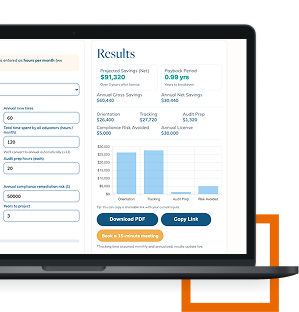
Healthcare organization leaders are under enormous pressure to get their institutions operating in the black. Rising costs, staffing shortages, cybersecurity threats, and growing attrition rates are among their leading challenges. While faced with all this, healthcare workers must maintain an unwavering focus on the quality of care and meet the ever-changing demands of regulatory agencies. As healthcare executives invest in digital transformations to help combat some of these urgent priorities, Dossier’s competency management platform offers departments, facilities, and health systems the opportunity to modernize competency management by moving it to the cloud, which improves efficiencies, eliminates waste and strengthens job satisfaction. Our evidence-based ROI calculator demonstrates more than $1M savings for a 1,000-employee nursing department, which means more nurses seeing patients and significantly more confident staff.
90% of nurses who participated in a recent HealthITNews survey said they are considering leaving the profession within the next year.
Managers and directors greatly benefit from the transition to cloud-based competency management. Not only does the shift help to combat waste – no more papers, binders, or storage space, but managers and directors gain reassurance in their care teams. The training compliance is up to date and visible at any time, either for a Joint Commission survey or staffing and forecasting purposes.
Dossier digitizes competencies to help healthcare organizations better control their resources – time, money, and talent. Immediate benefits include eliminating competency plan redundancies, paper, binders, and storage space.
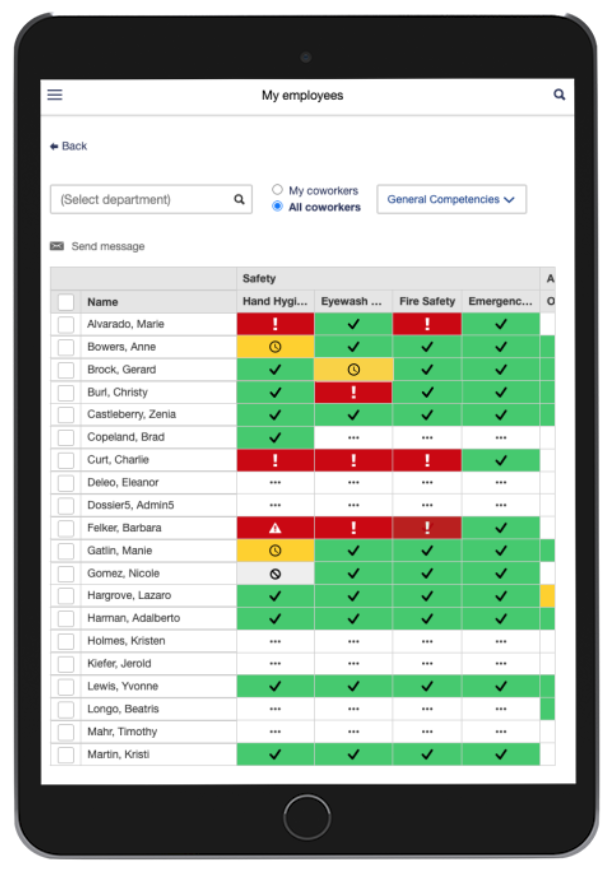
It sits on top of learning management systems – providing complete visibility so managers and directors can report on learner progress. In-system reminders allow managers and directors to nudge those falling behind. Having access to this level of data in real-time means leadership can ensure the right team is scheduled for every patient. Why? Because about 20% of what staff need to know is captured in the learning management system. The other 80% of what staff need to know pertains to competence – demonstrating the knowledge, judgment, behaviors and skills – for the roles they perform.
The outcome: better patient care
Along with better patient care, the benefits of digital competency management afforded to managers and directors include:
What do you like best about Dossier- Digital Competency Management?
Well, first, everything I do now is paper, and this program has taken that paper and almost fully automated it. Secondly, a dedicated team is setting up our facility/department-specific portfolio.
What do you dislike about Dossier- Digital Competency Management?
There is nothing that I dislike about this program/platform so far.
What problems is Dossier- Digital Competency Management solving and how is that benefiting you?
Dossier is giving me the ability to manage competencies in real-time and make them meaningful.
 G2 Dossier Review
Survey Day can be stressful, and with paper-based competency management, it’s easy to understand why. The amount of time chasing people and papers is inefficient and ineffective. The margin of error is astronomical for paper-based processes, and it’s not hard to understand why. Papers get lost, shoved in bags, left in lockers, passed around, misplaced and taken home.
Learn more about our compliance audit tool.
Authored By:

The New York Times recently ran an article highlighting concerns about increasing cases of COVID-19, the flu, and RSV and the strain they’re putting on pediatric hospitals. COVID cases are rising, and the flu season is starting earlier than usual.
The cases of children infected with RSV (respiratory syncytial virus), a common respiratory virus that usually causes mild, cold-like symptoms, but can be serious in children and older adults, according to the Centers for Disease Control and Prevention indices, are on the rise. Hospitals across the U.S. are drowning in RSV pediatric cases, as stated by NBC News reporter Aria Bendix in an Oct. 14, 2022, article.
Bendix also reports that California, Illinois, Massachusetts, North Carolina, and Rhode Island are reporting pediatric hospital bed capacity is strained due to the influx of RSV patients. It has us all questioning: Is our healthcare system on the brink of collapse?
Steven Ross Johnson, a U.S. News reporter, states in a July 28, 2022, article that these challenges are exacerbated amid ongoing reports of staffing shortages choking the U.S. healthcare system. In fact, Johnson lists the shortage of healthcare workers as the nation’s “top patient safety concern.”
Let’s not forget the portions of our population that are most likely to get the flu are children and those 65 and older. With more than 46 million people living in the U.S. over age 65, the concerns and need to support healthcare workers have become increasingly evident.
While there isn’t a magic cure to the problem, there are opportunities to ease pressures and improve operations to help healthcare workers work efficiently and get access to the information they need.
Technologies, such as Dossier’s competency management software, can:
These elements are critical for maintaining quality and patient safety. Because when patient admittance soars and teams are overworked and overwhelmed, burnout sets in, and mistakes happen. Dr. David Weill, a USA Today contributor, reports in his Oct. 24, 2022, article that nurses are already sounding alarms over their concerns for patient safety.
We need to ensure that as we enter this Winter season and face a potential ‘tripledemic,’ we are equipping healthcare teams with tools that will help them, not hinder them.
The hits to healthcare workers and public health just keep coming. While in an ideal situation, hospitals would be able to hire more staff, that isn’t possible. The talent pool needed for that just doesn’t exist.
We have to consider other, sustainable options – ones that help healthcare workers, department heads, and hospital administration. Technology advancements and digital transformations are already occurring in hospitals, but tools that immediately benefit those delivering care, especially when it comes to competency management, aren’t being prioritized.
It’s time to make the shift to digital competency management. The risks to quality and patient safety are just too great. Implementation for tools takes weeks – not months or years and the benefits to all are immediate.
If you are interested in speaking with the Dossier team, we’re ready and available to help.
Authored By:
Throughout the pandemic many healthcare professionals have expanded work functions and taken responsibility for new tasks. This role expansion put a spotlight on the need for digital tools that help staff quickly and efficiently convey information and guidelines to large numbers of employees.
We recently spoke with Eddy Mikkelsen, advisor in the Department for Subjects and Education. Ms. Mikkelsen manages the Dossier competence portal at Haukeland University Hospital in Bergen. We discussed how Haukeland University Hospital has used Dossier during the pandemic.
“Competence plans help us get things in order. We all know what is needed, and if staff need to be relocated, we have requirements for competence and competence plans, which they must implement before they can be included in the operation,” Mikkelsen said.
At the request of the clinical professional environment and the top management at Haukeland University Hospital, Mikkelsen and her colleagues prepared several new COVID-19 focused competency plans, including plans that cover undressing and dressing, as well as guidelines for patient cleaning and hygiene.
The Department of Subjects and Education worked closely with the e-learning team and produced short videos about the use of CPAP and respirators. This content was then distributed via Dossier’s competency platform, which pushed information to the right groups quickly and allowed for easy follow up on implementation status and competency progress.
“It is an advantage that employees know what is expected of them at all times. This means that both managers and employees have good insight into competence requirements. It benefits us all,” Mikkelsen said.
“We use competency plans to ensure employees are current on competency and in possession of the right competencies at the right times and places. In addition, we freed up a lot of time by avoiding manual review, updates and follow up. Employees automatically receive a notification when a competence requirement expires, and we have much better oversight.”
When COVID-19 entered Norway, having Dossier in place proved to be a great advantage as staff were already familiar with structured competence management, and thus, also with effective procedures for competence development and quality assurance.
“Everything has gone a little faster, and the need for new competence plans has been great. Fortunately, we work closely with those responsible for infection prevention, with directors and with those who have the professional responsibility for content. When we had to push plans for undressing and dressing throughout Helse Bergen and Haukeland, we used Dossier’s platform to immediately push those updates to 16,000 employees and students,” Mikkelsen said.
Today, Dossier is used by most of Norway’s healthcare system, as well as in Region Zealand in Denmark and Region Skaane in Sweden. Haukeland University Hospital in Bergen has been a pioneer in competence management. They were some of the first to use Dossier in 2014 when Dossier launched its new technology targeting healthcare competence management. The project was developed in collaboration with Norway, Dossier and Eddy Mikkelsen, as well as the Department for Subjects and Education at Haukeland Hospital.
The digital competency solution replaces many manual processes in a sector where there is a great need for training and competencies to be updated frequently. And during a time when complexity and documentation requirements have increased going digital makes sense and minimizes opportunities for error.
For many years, managing employee competence has been in physical and electronic folders, where it has been difficult to get a comprehensive look at competencies and competency gaps. With Dossier’s competence solution, competence development and certification can be managed and followed up within the digital competence portal, providing both managers and employees with an overview.
When exploring the healthcare sector as a market opportunity, the team agreed there needed to be a strong focus on change management, especially in relation to getting employees and managers to see the usefulness of digital competence management.
One approach to address concerns was to share stories about how shifting from paper to digital would improve efficiency and staff job satisfaction. As a result, those metrics were monitored.
The Dossier team knew they needed to select committed, ambitious partners, so they intentionally sought health systems with numerous competence requirements and documentation (e.g. in relation to introductory programs and medical equipment).
The collaboration with Helse Vest resulted in a powerful, robust platform that meets the needs of healthcare systems around the world. When you join the staff at Helse Vest today, you are automatically assigned a competency plan, which includes competency plans for hygiene, information security, fire and rescue, and first aid. The plan is valid for one to two years, and employees are notified by the Dossier system when plans expire.
To verify critical competence, digital signatures from skill assessments, return demonstrations and preceptor-based training sessions were crucial to gather evidence that satisfied regulatory requirements from auditing authorities.
The COVID-19 crisis provided Mikkelsen with new opportunities for the competency portal, “Users are more positive. We have worked systematically since the beginning, and we were able to stay one step ahead during the pandemic. Some of the doctors have previously been difficult to motivate due to busy lives, but they quickly saw the benefits of working with digital competency plans. Those who previously had reservations, now see the value.”
Authored By:
A CFO asks a CEO: “What happens if we invest in developing our people and then they leave us?”
The CEO responds: “What happens if we do not and they stay?”
We are often asked, “What is competence and how do leading organizations develop it?” The answer is dependent on the organization and the situation. Competence occurs when people demonstrate expertise in their roles. Competence development, then, is the ongoing assessment and improvement of the knowledge, skills, judgement and behaviors that roles require to build and sustain expertise. For organizations to excel, leaders must be strategic in their approaches to competence development, as it is essential for continuous improvement.
The strain of the pandemic has been felt at both the individual and organizational level. Many executives have used the pandemic as an opportunity to identify and close competence gaps. Evaluating employees, tasks, behaviors, processes, etc. to create standards for competence and, then, identifying individual performance gaps helps to ensure the organization and staff are on the path to excellence. This requires executives to view professional development as an investment in the organization’s future.
An organization’s competence plan should be operational and not so overarching that it only becomes words without real content. The plan should define the guidelines necessary to to mobilize, further develop, or acquire competencies. It should also be operationalized through an action plan with specific activities and an implementation timeline.
Standardizing competence helps organizations, especially those in healthcare, ensure the right people have the right skills for the tasks they are responsible for. While industry standardization is the goal, organizations can standardize competence to ensure staff knowledge while identifying and closing performance gaps. Staff appreciate the investment in professional development, which helps to boost morale. As well, organizations are rewarded with higher-quality performance.
The competence strategy, established at the organizational level, defines the vision. When creating a competence strategy, a good starting point is for executives to answer the following:
In addition to building the competence strategy, executives should also assess the environment and capture anything (internal or external) that could influence competence development and desired outcomes. This level of scenario planning can help identify budget needs and help ensure the company is adequately prepared for possible disruptions. This critical step helps to identify opportunities for changes and ongoing improvement. It may be necessary to document re-evaluation periods, times when changes to plans may be needed at the strategic level based on changes to the environment.
Establishing a clear vision for organizational competence is only part of the strategy and should be included with other goal and management documents.
Once the organization has clearly defined its vision for competence, it’s time to assess performance against that vision. Identifying gaps is a critical step in developing the action plan and a timeline for measuring improvement. Once gaps are identified, competence development can occur. Competence plans are built, implemented and monitored at various levels within the organization.
Competence development takes place in many different forms, from comprehensive formal education to more informal side-by-side instruction. Plans should use a blended learning method.
In some cases, all employees may need to be trained when, for example, an organization introduces new digital systems. In other cases, a select few may need new skills in connection with the work they perform. The starting point for prioritization should be the organization’s current situation, then future needs.
Competence development is an essential investment by the organization and needs to be viewed as such by leadership. Just as upgrading technology is regarded as an organizational priority, competence development should be, too.
Once the training needs for staff have been identified, a budget should be built. Protecting the budget from being reduced or removed, especially during recessions, is highly recommended.
When operationally mapping which competencies should be developed, involve key people in the organization in workshops designed to discuss current issues and scenarios. To be sure you have come up with the most relevant competencies, have discussions with individuals at different levels and within different departments. Systematically review each work area, department and facility. Assess instructions, procedures and requirements for the different roles. Then you can use goal and development interviews as a basis for preparing and updating competence profiles for each individual employee.
The next step is to document and educate staff about the expectations and their competency plans. Be clear about the measurable outcomes of demonstrating competence. Each action plan should be as specific as possible, but not so extensive that staff get stuck. Plans should contain the following:
Competence development should always be adapted to the organization’s ambition level and access to resources. The goal should be to make your plan thorough, but simple. Good luck in your work with strategic competence development!
Authored By:

The Great Resignation is a sad and sobering reality and one we will likely be dealing with for years to come. Our healthcare system has been hit particularly hard. While the U.S experienced nursing shortages prior to the beginning of the pandemic in 2019, they were exacerbated when the pandemic hit. In the U.S., about 1 in 5 healthcare workers have left their jobs since the pandemic began. With the pandemic entering its third year, questions continue about the stability of our healthcare system when frontline workers are experiencing extreme burnout.
Nearly 400,000 healthcare workers have left their jobs since the start of the pandemic, according to the U.S. Bureau of Labor Statistics. In January 2022, hospitals in 18 states reported critical staff shortages, including Kentucky. 60 Minutes recently shared a segment highlighting the challenges felt by three hospital CEOs in Kentucky, which was cause for concern. Is our healthcare system teetering on the brink of collapse? It could be if actions aren’t taken to address frontline worker recruitment and retention.
In a recent survey by the American College of Healthcare Executives, hospital CEOs ranked personnel shortages among their leading concerns, outpacing financial challenges for the first time since 2004. Overwhelmed clinical AND non-clinical staff are leaving for better pay, more benefits, and less stress. In light of this, hospital executives are forced to make retention and recruitment their top priorities.
Healthcare workers chose to work in healthcare because of their passion to help others. They are continuously learning and growing so they can provide better care to patients. With the staff shortage, these essential workers are left with just enough time to put out fires. They don’t have the luxury to spend the time they want with patients. They don’t have the luxury to spend time looking after themselves. They are overwhelmed, overworked, and burned out.
How are hospital executives trying to solve this? Becker’s Healthcare interviewed 22 executives asking what changes are needed to improve retention.
To no surprise, mental health and wellness was cited as one of the most important factors to reduce and manage burnout. A strategy could be as simple as an executive walking the halls and wards thanking the staff. This is effective in a crisis (such as the pandemic) but is not sustainable or scalable. Hospitals should also look for simple-to-implement, innovative methods to help staff free up time, and allow them to take that critical mental break.
Another critical and effective strategy to improve retention is staff engagement. During times of high-stress, it’s easy to lose sight of one’s sense of purpose and deprioritize individual growth. Hospital executives can help staff keep purpose and growth top of mind.
An effective onboarding process helps to set employees up for success — helping new hires acclimate to the culture of the hospital should be part of the onboarding process. Hospital executives that include recognition and professional growth as part of staff orientation can help to keep staff engaged — which affects retention through job satisfaction. In a recent Becker’s Healthcare article, two statements, in particular, support this need for staff engagement as a retention strategy:
“Providing managers and leaders with tools through focused education and training is imperative to a successful engagement culture.”
Paula Pritzl
Director of Employee Relations
Marshfield Clinic Health System
“In addition to all our efforts and successes in retaining what staff we have, we will have to continue to recruit new healthcare workers.”
Scott Dimmick
Chief Human Resources Officer
Lakeland Regional Health
For existing employees, gaining new knowledge through upskilling and career laddering helps them feel valued by the organization and reinforces that their careers are moving forward. Staff feel valued by their organizations when they experience professional growth and career advancement. And that translates to increased job satisfaction.
Millennials are now the largest generation in the workforce. They value diversity, equality, empowerment, involvement (a respected voice in what is going on), flexibility (real flexibility, not just bid shifts), formal professional development with planned (guaranteed) career advancement, all things technology and mobile, and organic cultures with much less structure. Hospital cultures need to evolve with the wants and needs of this modern workforce. Hospital executives can support that evolution by focusing on these values and incorporating them into the organization’s culture.
As an industry, our goal should first be to help our current workforce regain their personal time and focus on their wellness. This will help to address burnout and increase attrition. Then, focus on professional growth. Career advancement is important; it helps establish value between employer and employee. We also need to look for new, creative ways to onboard and train new staff so we can easily and quickly ensure their competence and continue to deliver high-quality patient care.
Through the heroic efforts of our healthcare leaders, clinicians and other essential workers, we have kept up with the demands placed on healthcare—in many cases, just barely. But this is not sustainable unless things change. Healthcare is feeling the pressures of digital transformation. Historically, it’s been slow to invest and evolve. But now, we are at an inflection point. We MUST embrace technology if we are to sustain the level of healthcare quality and safety that is expected today.
Authored By:

Not everything you know about how we learn is true. In fact, many myths about learning have been proven wrong, but they are so ingrained in our culture that people continue to believe them as truth.
The thought that people learn more when they are ‘actively engaged’ in learning, which some define as dragging, clicking or hovering over something to access information – like an online course – isn’t true. This type of interaction can actually take focus away from learning.
The truth is, to successfully engage learners and strengthen their retention of content:
This approach forces learners to focus on the content and use more of their mental (cognitive) capacity, helping them to retain what they are learning.
Many believe it is important to evaluate retention of knowledge with exams before and after training has occurred. They wrongly believe a test after the course successfully measures retention. Unfortunately, short-term memory is the only element being tested in these situations. These evaluations do not measure what was retained after a week or whether learners applied what they learned or changed behaviors.
People learn best if they are trained and tested in application of the information, not in recognizing or repeating information correctly.
If you really want to find out if someone has learned something, a different approach is needed, including doing all of the following:
We naturally assume that people are paying attention during presentations and that they retain what was presented. We also assume they apply that gained knowledge at a later point in time. It would be wonderful if this were true!
Even when people remember the content if they are asked about it, there is a good chance they do not remember it when they get into a situation where they should use what they learned.
So how do you help people retain information?
Start by defining what you want people to do after the training. Use methods such as action mapping (Cathy Moore), design thinking or other methods to break down and find out what knowledge gaps or behaviors need to change. From there, offer guidance to help learners apply what they learn and offer ongoing support.
Having the right mindset when it comes to successful professional development not only helps to ensure your training program meets individual needs, it also puts your organization on the right track for developing life-long learners. What’s more, Dossier’s competency management platform was built to help facilitate learning and skills tracking every step of the way. By aggregating millions of learning requirements on one user-friendly dashboard, Dossier makes it seamless to have complete visibility of individual competencies and organizational progress. So, you can rest assured that staff across every department have the tools at their fingertips to learn in the best way possible.
Clark N. Quinn, 2018, Millennials, Goldfish & Other Training Misconceptions: Debunking Learning Myths and Superstitions, Association for Talent Development
Cathy Mooreon Action mapping: https://blog.cathy-moore.com/action-mapping-a- visual-approach-to-training-design /
Harold Stolovitch, 2011, Telling Ain’t Training, Association for Talent Development
Authored By:
Recently, I had the pleasure of attending the 2021 Annual OR Manager conference. It was fantastic meeting with and learning from amazing frontline leaders in healthcare.
What I heard over and over again is that one of the biggest challenges facing our healthcare system today is staffing. At one session in particular, the speaker shared that it can take 12 to 18 weeks to onboard a PACU nurse. That is a lot of time, especially when faced with staff shortages.
Knowing that the onboarding process critically depends on ensuring competency, I asked myself…
“How much time does a nurse educator spend chasing paper records versus actual training?”
I wondered if and how digital competency management plays a role in reducing administrative work to allow for more training time.
The way I see it, staff, educators, and executives would ALL benefit from going digital.
In a recent nationwide survey, the leading reasons for nurses leaving were feeling overworked (27 percent) and lack of job satisfaction (16 percent). Staff are looking to learn and grow, so they can do their jobs more effectively and confidently. They don’t want to be mired with administrative tasks. Maybe that’s why today, competency management has been described as the ‘Great Paper Chase.’
On the other hand, with competency management moving from paper to the cloud, staff will become much more organized. They aren’t spending valuable hours stressed, while chasing paper and looking for that checklist to get signed. By having a clear list of competencies to achieve, the time spent with their preceptors becomes more efficient and effective.
This is essential for ensuring a successful transition to practice.
Nurse educators make a difference by passing their skills and knowledge to new and existing nurses. Inherently, they play many parts: role models, innovators, critical thinkers, mentors, cheerleaders, and confidants. Likewise, by identifying learning needs, they encourage trainees academically and improve clinical competence and personal confidence. They can’t do this stuck in an office buried in paperwork.
Going digital doesn’t just lead to more training, it leads to better training, because it eases the administrative burden. Nurse educators can finally get away from their desks and actually get more quality time with their trainees. Rather than spending time shuffling papers, they now have time to enhance the organization’s training programs. After all, it’s about creating high-performing staff who deliver higher-quality patient care.
According to a 2020 AORN Survey of nurse educators, on average, a nurse educator will orient up to 50 new employees in a year and be responsible for approximately 50-400 nurses at a time. That’s a significant number to teach and track! Not to mention, some are working 98 hours per pay period and 25% of that time is spent doing administrative (competency management) tasks. That’s nearly 24 hours of wasted time per pay period, much of which could be freed up to provide more valuable training time.
In 2021, with hospitals losing an average of $3.6M to $6.5M due to turnover, increasing retention is more critical than ever before. Improving job satisfaction is one way to do it. Just think about it: when nurses are spending their time chasing paper or stuck behind desks, they can’t engage with patients, which is, arguably, their biggest passion. So it’s no surprise job satisfaction and employee morale take a major hit. On the flip side, cloud-based competency management means nurses can learn and document their competencies, even at a patient’s bedside. It means there is clarity for growth and career laddering, an essential part of the MAGNET pathway. It also means a happier staff that performs better and delivers higher-quality patient care.
We operate in an increasingly fluid healthcare environment. Evidence-based procedures are constantly being updated. New technologies are being adopted, and rapid environmental changes are now the norm. A digital solution means individual, department, facility and organizational competency plans can be developed, revised and distributed within minutes. What once required updating – at times – hundreds of binders, chasing people down if progress wasn’t made, can now be managed on any device at any time. Plus, built-in reminders can be sent when progress isn’t made. Going digital means staff, educators and administration can easily see and access all competency requirements in a user-friendly platform.
A digital competency strategy isn’t just about making sure someone completes a checklist. It is the foundation for building a solid preceptor education program that has the capacity to train more nurses and train them better than ever. This results in higher-caliber and happier staff, while ultimately saving money and lives.
Authored By:
Recruitment and retention of Registered Nurses (RNs) are among the biggest challenges in healthcare. The U.S. is experiencing a shortage that is expected to intensify as more than 500,000 retire and others leave their nursing positions due to burnout and other frustrations. The U.S. Bureau of Labor Statistics projects the need for 1.1 million new RNs for replacement of those retirees and to address the gaps left by others vacating their roles. By 2022, there will be far more registered nurse jobs available than any other profession, according to the American Nurses Association.
The strain this nursing shortage will put on the U.S. healthcare system is concerning, especially as the system is already strained from COVID-19. Adding to those concerns, nursing schools across the country are struggling to expand capacity and meet the rising demand for skilled nurses.
Some reports indicate we are already experiencing a nurse shortage and hospitals have moved to an ‘all hands on deck’ staffing approach. It’s also resulting in nurses floating – a form of resource sharing that allows for coverage. The challenge with floating is ensuring nurses have the knowledge and competencies for delivering quality care in a timely manner.
Nurses are exhausted and overworked. Administrative burdens contribute to the burnout. As nurses spend more time away from the bedside on nonvalue-added tasks, job satisfaction decreases. There are immediate actions hospitals can take to improve nurse satisfaction. Moving antiquated paper processes to digital eases administrative burdens, frees up critical hospital resources (time, money, talent and space) and results in more time with patients and improved job satisfaction. Most importantly, it helps nurse educators get out from behind the desk and alongside new hires and trainees.
Competency management is often referred to as ‘the great paper chase.’ It’s become a major resource drain. It’s time to move from paper and binders to the cloud. Going digital empowers staff. It allows them work efficiently by giving nurses access to the tools and data they need to do their jobs. It arms managers and nurse educators with immediate feedback, which means faster scheduling and more immediate and customized skilling to ensure competency.
We estimate the average manager spends 15 days chasing paperwork each year. That’s a significant amount of waste. When you multiply that amount per manager, you can see how the great paper chase is a resource drain. Technology can be used to help nurses perform their jobs more efficiently and has numerous other benefits. In addition to the previously mentioned benefits, digital competency management also:
With nursing shortages and high turnover, offering tools such as digital competency management can help improve nurse satisfaction. Easing administrative burdens to allow for more time with patients would be well received. And leadership benefits from this investment as well.
As nursing shortages, ‘all hands on deck’ and floating continue, Chief Nursing Officers need immediate reassurance that the assigned care team meets competency and knowledge requirements. Dossier allows that line of sight. We call it accessing the ‘learning ecosystem.’ What it means is users gain visibility to course completion, competency management, checklists, and more. This immediate reassurance isn’t possible with today’s paper-based methods for competency management.
When technology is used to replace heavily manual processes, the benefits are tangible and measurable. In competency management, the biggest benefit for institutions is the ability to free up resources.
The time has come. Put an end to the great paper chase and get One Step Ahead.
If you are interested in scheduling a demo, you can do so here.