
Competency management is how organizations make sure their people can actually do what their roles demand, not just in theory but in practice. It combines defining the skills each role requires, assessing whether staff meet those standards, and keeping that picture current over time. In high-stakes fields like healthcare, it is the difference between assuming staff are ready and knowing they are.
How Competency Management Works
The process follows a clear cycle.
First, define competencies for each role in a shared framework.
Next, assess staff against those competencies through observation, testing, or demonstration.
Then validate and document the results so there is a clear record.
Finally, identify gaps and close them with targeted education, and repeat the cycle as roles, technology, and standards evolve.
The strongest programs make this loop continuous rather than a once-a-year scramble.
Manual Tracking vs. a Dedicated Platform
Many organizations still run competency management on spreadsheets and paper binders. It works until it doesn’t.
Manual tracking is slow to update, hard to audit, and easy to let slip.
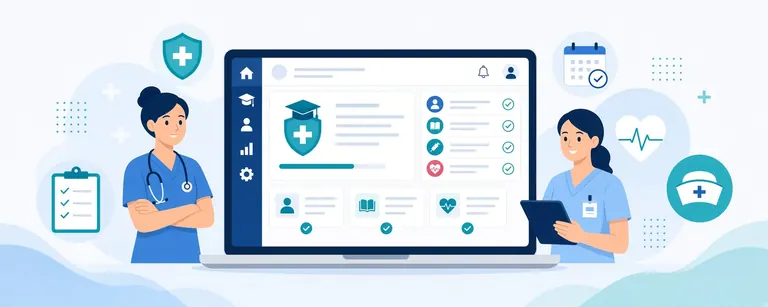
A dedicated platform, by contrast, captures results in real time, consolidates data into one dashboard, generates audit-ready reports on demand, and connects directly to learning so gaps get closed.
The difference shows up most during a survey or an unexpected staffing change, when manual systems leave leaders scrambling and platforms provide answers in minutes.
What to Look For in a Competency Management Platform
When comparing options, prioritize real-time skills tracking so status is always current, a single dashboard that unifies data across departments, and reporting that produces audit-ready evidence without manual effort.
Look for tight integration with your learning tools so assessment and education feed each other, and confirm the platform scales across roles and sites.
Finally, weigh ease of use for frontline staff and educators, because the best system is the one your team will actually adopt.
Frequently Asked Questions
It is common in healthcare, but any organization with skill-critical or regulated roles benefits, from manufacturing to pharmacy to laboratory services.
An LMS delivers and tracks training, while competency management verifies that skills are actually performed to standard. The two work best together.
If audits cause panic, data lives in multiple places, or you cannot quickly answer who is competent in what, it is time for a dedicated platform.
See how Dossier delivers this as a modern competency management platform built for real-time skills validation and audit readiness.