





A healthcare LMS (learning management system) is software built to deliver, track, and document training, competencies, and continuing education for clinical and non-clinical staff. To choose the right platform, prioritize regulatory compliance tracking, competency management, clinical content, integrations with your HR and credentialing systems, and reporting that stands up to accreditation audits.
What Is a Healthcare LMS?
A healthcare LMS is a learning management system designed specifically for the needs of hospitals, health systems, long-term care, and other care settings. Beyond hosting courses, it manages mandatory compliance training, tracks license and certification expirations, documents demonstrated competencies, and produces the audit-ready records required by regulators and accreditors such as The Joint Commission and CMS.
General-purpose corporate LMS platforms can host videos and quizzes, but healthcare LMS platforms add the compliance, competency, and credentialing capabilities that patient-care environments demand.
Why Healthcare Needs a Specialized LMS
Healthcare training is higher-stakes and more heavily regulated than most industries. Staff must complete recurring compliance modules, maintain licensure, and prove hands-on competency, not just watch a course. The right platform reduces compliance risk, shortens onboarding, standardizes skills across units, and gives leaders visibility into workforce readiness. The wrong platform creates manual tracking, audit gaps, and frustrated staff.
Key Features to Look For
When evaluating a healthcare LMS, focus on the capabilities that map to real clinical and regulatory needs rather than a long generic feature list. The most important include: compliance and mandatory-training automation, competency management with skills validation, license and certification tracking with expiration alerts, a library of accredited clinical content (or easy content authoring), role- and unit-based assignments, robust audit-ready reporting, and integrations with HRIS, scheduling, and credentialing systems. Mobile access and a clean learner experience also drive completion rates.
Compliance and Accreditation Support
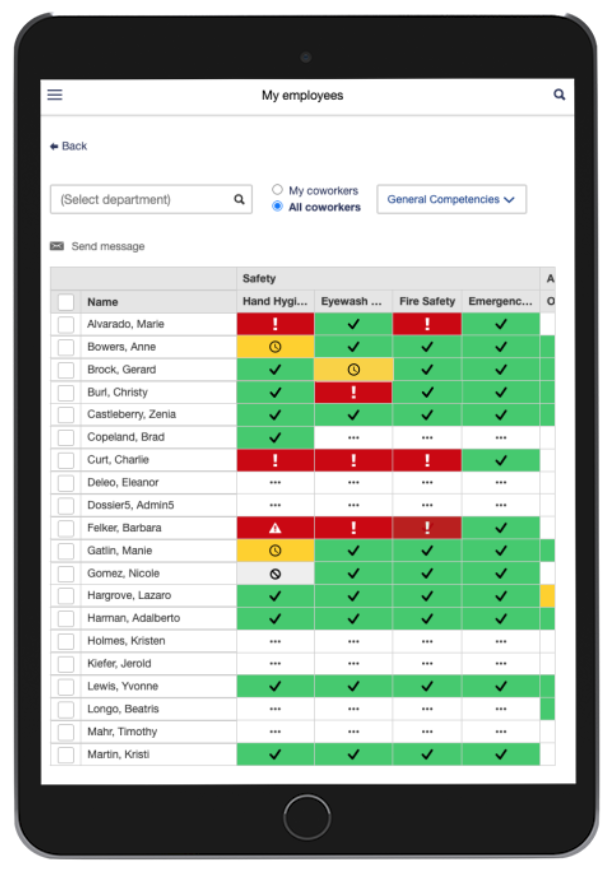
This is where healthcare LMS platforms earn their keep. Look for automated assignment of required training by role, automatic reminders before due dates, complete audit trails, and one-click reporting that maps to accreditation standards. The ability to show a surveyor exactly who completed what, and when, can turn a stressful audit into a routine one.
Competency Management vs. Simple Course Completion
A course completion tells you someone watched training; a competency tells you they can actually perform a skill safely. Strong platforms go beyond “click and complete” to capture skills checklists, preceptor sign-offs, and evidence of demonstrated ability. This distinction matters most for clinical roles, where the goal is verified capability, not just attendance. Organizations focused on true clinical competency often pair or replace a traditional LMS with a dedicated competency-management platform that centralizes skills, certifications, and validation in one auditable system.
How to Evaluate and Compare Platforms
Run a structured evaluation rather than relying on a demo alone. Define your must-have requirements, involve nursing education and compliance stakeholders early, and score each vendor against the same criteria. Ask for references from similar organizations, test the reporting with your own audit scenarios, confirm integration support, and clarify total cost including implementation and ongoing content. A short pilot with real users is the best predictor of adoption.
Frequently Asked Questions
What is the difference between an LMS and a healthcare LMS? A general LMS delivers and tracks training for any industry. A healthcare LMS adds compliance automation, competency management, license and certification tracking, and audit-ready reporting tailored to clinical settings and accreditation requirements.
How much does a healthcare LMS cost? Pricing varies widely based on the number of users, features, and content libraries, and is usually quoted per user per year plus implementation. Always confirm whether accredited clinical content and integrations are included or priced separately.
Does a healthcare LMS handle competency management? Some do to a degree, but competency management, skills validation, preceptor sign-offs, and evidence of demonstrated ability, is often deeper in dedicated competency platforms. Confirm exactly how a vendor captures and reports true competency, not just course completion.
What integrations should a healthcare LMS have? At minimum, look for integrations with your HRIS, scheduling, and credentialing systems so that roles, assignments, and certification data stay in sync automatically and reduce manual data entry.